
Landscape Architecture Services for Planning, Design and Technical Delivery
Landscape Ally provides proportionate landscape architecture support for projects across London, the South East and the South of England.
We work with architects, developers, planning consultants and built environment teams to create clear, coordinated and deliverable landscape proposals, from early planning strategy and concept design through to technical drawings, and implementation support.
Our role is to provide the right level of landscape information at the right time, helping clients make clearer decisions, reduce planning risk, discharge conditions efficiently and move towards buildable landscape proposals with confidence.
-
Minor developments often need focused, carefully coordinated landscape information. This may be required before planning submission, to support validation and policy compliance, or after permission, when landscape-related planning conditions need to be discharged.
Landscape Ally supports architects, planning consultants and SME developers working on small to medium-sized residential schemes, particularly in London and urban contexts where space, policy and programme pressures can be tight.
We can help with planning application support, Urban Greening Factorrequirements, amenity space statements, planting plans, maintenance schedules and landscape condition discharge packages.
The aim is simple: provide clear, proportionate information that helps planning submissions move forward smoothly.
Planning application and validation support
For projects still preparing for submission, Landscape Ally can review layouts, identify landscape planning risks and prepare the drawings or statements needed to support validation and policy compliance.
This may include Urban Greening Factor masterplans and calculations, amenity space justification, planting strategy, landscape strategy plans, or short written design rationale for use within a planning statement or Design and Access Statement.
Planning condition discharge support
For projects that already have permission, Landscape Ally can prepare coordinated information to discharge landscape-related planning conditions.
This may include hard and soft landscape plans, planting schedules, materials information, boundary treatment details, green roof or green wall information, and five-year maintenance schedules.
Where conditions are detailed or overlapping, we can review the wording and advise on the most efficient package needed for submission.
Learn more about our planning condition discharge services
Indicative fees for minor developments
The following fees are typical starting points to help clients understand likely costs and choose the right level of support.
Fees vary depending on site size, complexity, planning authority requirements, number of conditions, number of design iterations, and whether landscape proposals already exist or need to be prepared from first principles.
Minor Development Landscape Review From £300
Urban Greening Factor Masterplan and Calculation From £450
Amenity Space Quality Statement From £450
Landscape Strategy for Planning From £900
Planting and Maintenance Package From £900
Landscape Condition Discharge Pack From £1,350
Send through the planning condition, site plan or draft layout and Landscape Ally can advise on the most efficient scope.
-
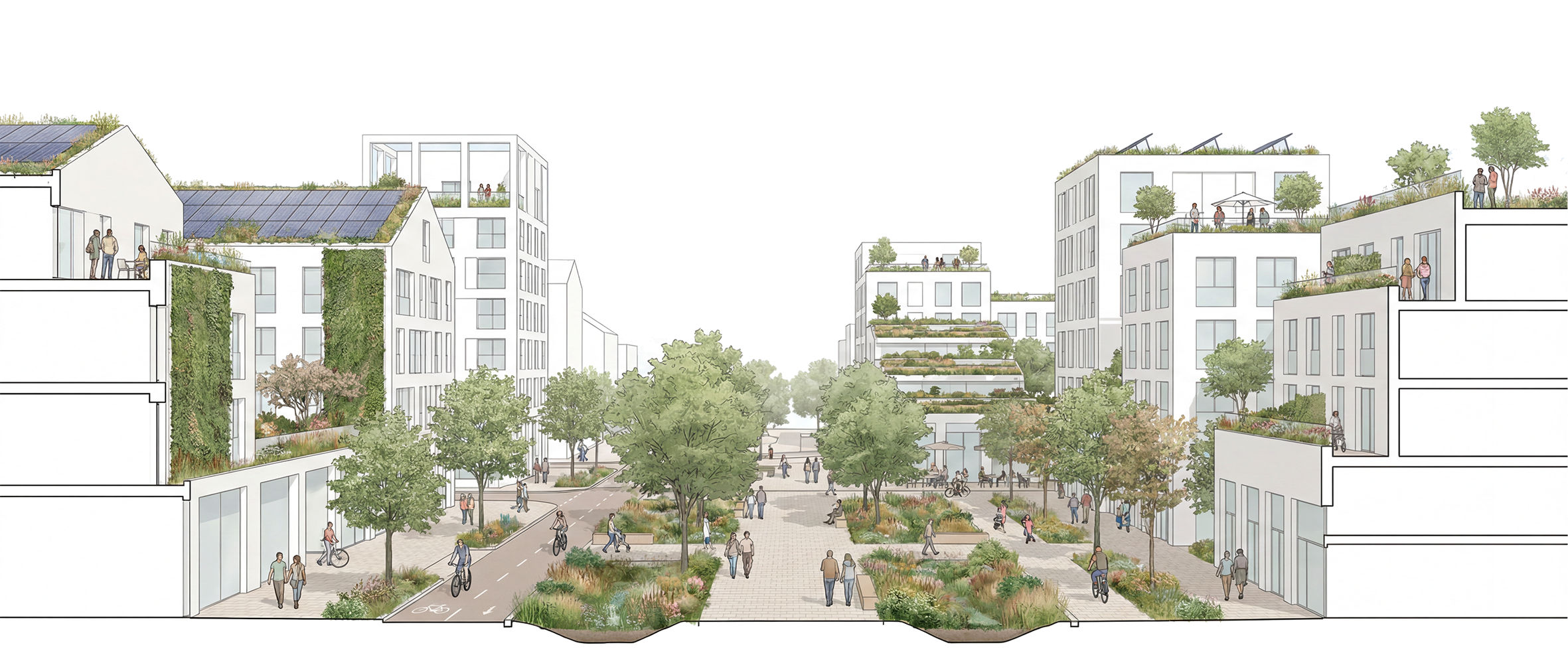
Major developments need landscape input that is creative, coordinated and technically robust.
Landscape Ally supports architects, developers, planning consultants and wider consultant teams working on larger residential, mixed-use, education, healthcare, public realm and urban development projects.
Our role can begin with early landscape strategy and feasibility, or later through planning support, technical design, specification and delivery coordination.
For larger schemes, fees are scoped around the project stage, complexity, programme, consultant team structure, planning risks, procurement route and required deliverables.
RIBA Stage 1–2: Early landscape strategy and feasibility
Early landscape input can help shape the direction of a scheme before key decisions become fixed.
Landscape Ally can support site strategy, identify landscape opportunities and constraints, and help align the external environment with planning, sustainability and placemaking objectives.
Support may include:
Site appraisal
Landscape opportunities and constraints
Green infrastructure strategy
Public realm principles
Early UGF and BNG considerations
Movement, access and amenity strategy
Tree, planting and habitat opportunities
Coordination with architects, planners, ecologists, arboriculturists and engineers
Value for clients: Clearer early decisions, stronger site strategy and reduced risk of late-stage landscape redesign.
RIBA Stage 2–3: Concept design and planning support
Landscape Ally can develop creative and coordinated landscape proposals to support planning applications, design team coordination and planning risk management.
This can include landscape concept design, masterplanning, planting strategy, amenity space strategy, UGF calculations and landscape planning support.
Support may include:
Landscape concept design
Landscape masterplans
Public realm and podium landscape design
Planting strategy
Amenity space strategy
Play and social space strategy
BNG-informed landscape coordination
Landscape planning statements
Design and Access Statement landscape text
Landscape and visual or townscape input where proportionate
Coordination with the planning consultant and wider design team
Value for clients: A clearer planning narrative, better coordinated drawings and a stronger landscape response to policy, place and programme.
RIBA Stage 4–5: Technical design, specification and delivery support
Landscape Ally can prepare detailed landscape design packages for planning condition discharge, tender, construction and implementation.
This stage is where planning intent becomes buildable information. Drawings, specifications and schedules need to be coordinated with architecture, drainage, levels, structures, arboriculture and contractor requirements.
Support may include:
General arrangement plans
Hard landscape drawings
Planting plans, schedules & plant specification
Hard materials information
Levels and interface coordination
Edge, planter, podium and roof garden coordination
Green roof and green wall coordination
Landscape specifications
Maintenance and management plans
Designer’s risk information under CDM
Tender support
Review of contractor information
Site observation, snagging and implementation support
Value for clients: Clearer tender information, fewer coordination gaps and landscape proposals that are easier to price, build and maintain.
BIM and digital coordination
Landscape Ally can support coordinated design using Revit and BIM workflows. Used well, BIM can help test levels, edges, thresholds, podiums, roof gardens, planting areas and interface conditions more clearly.
Support may include:
Landscape Revit modelling
Coordination models
Levels and interface checking
Area schedules
UGF and landscape area tracking
Support for architecture-led BIM coordination
Value for clients: Better coordination, clearer spatial testing and fewer inconsistencies between drawings, models and schedules.
Landscape and visual support
For sensitive sites, Landscape Ally can provide proportionate landscape and visual input to support planning strategy and design development.
The scope can be tailored to the scale and sensitivity of the project, from early landscape and visual appraisal through to coordination with visualisation consultants or wider environmental information.
Support may include:
Landscape and visual appraisal
Mitigation planting strategy
Visual receptor and viewpoint coordination
Input to planning statements or environmental information
Coordination with verified views or visualisation consultants where required
Value for clients: A clearer understanding of landscape and visual issues, with mitigation integrated into the design rather than added late.
For larger or more complex schemes, Landscape Ally can review the project stage, planning risks and required deliverables before recommending a proportionate scope.
-
Some projects need ongoing landscape input rather than a rigidly defined package from the outset.
For clients working across multiple projects, stages or workstreams, Landscape Ally offers flexible Support Plans that provide access to senior landscape expertise without committing to a fixed scope too early.
This can help design teams respond to changing priorities, planning comments, programme pressures and coordination requirements as they arise.